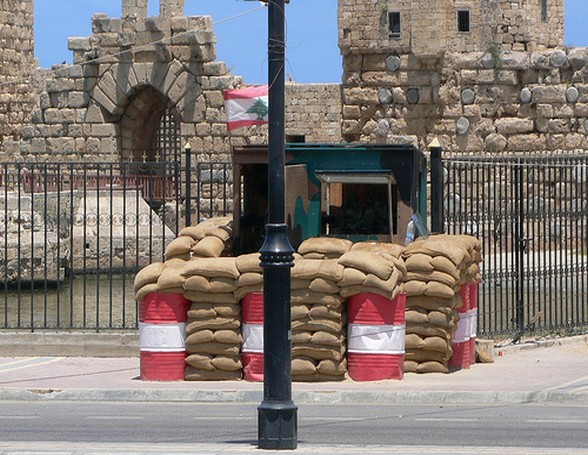
Road Block etiquette in Lebanon
April 30, 2010 by HeatherCowper
Filed under Lebanon, World
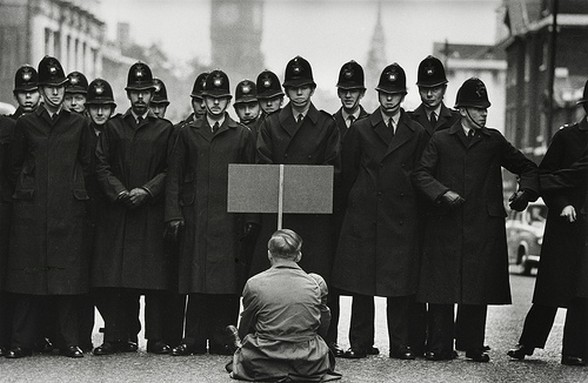
If you visit Lebanon, you’ll probably be wowed by the buzzy atmosphere of Beirut, get lost in the Souks of Sidon or love the gorgeous mountain scenery on the Lebanon mountain trail, but you may just be a little taken backs to find a number of roadblocks and police check points as you travel around the country.
It’s a reminder that although Beirut is currently a safe place to visit, it’s not always been so, and that political stability in this part of the world can sometimes be a little fragile. But you shouldn’t worry unduly about passing through army road-blocks and check-points. They’re a fact of life for the locals who take them in their stride and you should see them as a sign that the government wants to protect you and the local population from harm.
I was surprised to find how easy it is to drive around Lebanon, with road signs mostly in English and Arabic, good roads and maps, and although I was driven by a friend who lives in Beirut, I wouldn’t have minded hiring a car to get around. If you do a tour of the country like we did, you’ll inevitably pass through some road checkpoints, in which case you should slow down or stop until waved on by the guards.
If you’re in a hire car or are obviously a tourist it’s unlikely that you’ll be stopped, but you should always travel with your passport just in case, even when driving around Beirut (although with the mad traffic, I wouldn’t recommend that). If you’re walking around the downtown area of Beirut you may also pass through police points and may have your bag checked. A polite smile doesn’t hurt and you’ll find that some guards will studiously ignore you and keep a stern face while others appear more relaxed – remembering they’ve got a serious job to do. It’s obviously not advisable to take any photos of the guards or checkpoints either.
I suppose that when travelling with my friend, two ladies in a car with diplomatic plates were unlikely to receive the full stop and search treatment, while younger guys or men in groups may come in for more attention.
Have you been to any places where armed road blocks and police checks were common and what were your experiences?
PS Today’s your last chance to vote for me at Tripfilms April Video-maker of the month - if you enjoy my videos, please head on over and vote for me here - I could win a trip or hotel stay and a chance to make more videos. Thanks a million!
This photo was posted for Photo Friday - hosted at Delicious Baby – head over to see all the oher Friday photos.
This post has been submitted to the Blogsherpa carnival over at Todd’s Wanderings
More Lebanon stories to enjoy
Sea-castles, Souks and Soap in Sidon
The cedars of Lebanon – Tannourine Cedars Reserve Video
St Anthony’s Monastery in Qozhaya in Lebanon
Read more travel articles at Travel Blog Home
Don’t miss out – subscribe to Heather on her travels
Street art and vintage in the Northern Quarter of Manchester
April 29, 2010 by HeatherCowper
Filed under Art and design, Leisure, Manchester, North of England, United Kingdom
On our recent weekend break in Manchester I spent an hour or so on the Sunday morning wandering around the Northern Quarter. On my Friday night out I’d got the impression that Manchester was all about dressing up WAG style in short skirts, high heels and the latest designer gear, but the Northern Quarter painted a different story. In this network of streets it’s more grunge than glitz and this is the neighbourhood where you’ll find the one-off designer and vintage shops, restaurants and bars as well as street art and cool, arty cafes.
We’d actually dipped our toe into the Northern Quarter the Saturday night before when we stopped off at for some late night live jazz at Matt and Phreds, and on a Sunday morning I rather felt I was missing out as we navigated half dug up roads and closed shops. I think that a Saturday morning would definitely be a better time to visit the Northern Quarter if you enjoy rooting around in Vintage stores for something kitsch, cool and not too expensive, or to hang around in some of the art cafes and co-operatives around the neighbourhood. We downloaded a walking guide called Creativity and the City, from the Visit Manchester website covering some of the highlights of the area, and used it for information on the cool places to look out for.
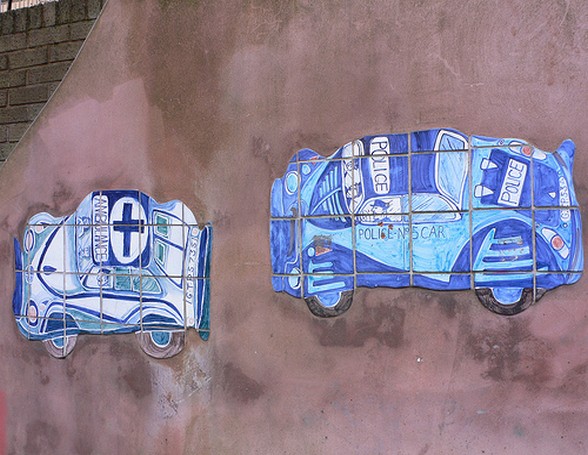
We did manage to stop by for a cup of tea at Koffee Pot, great place for a fat-boy fried breakfast, passed by the Manchester Craft and Design Centre in an old Victorian Market Hall, and pressed our nose against the glass of Rags to Bitches, queen of the many Vintage stores around here. Down some side streets I also spotted some unusual street art that was a cut above the usual colourful murals made of Blue and white painted tiles – were they by the well known Manchester Mosaicist, Mark Kennedy - can someone tell me?
These Manchester Urban Culture Trails are excellent for the weekend visitor to Manchester to help you home in on some fascinating things to see on the themes of Radical Manchester (Museums and Galleries), Creativity and the City (Contemporary Arts), The City Performs (Theatres), The Sound of Manchester (Music) Each of the downloadable trails can be viewed on screen with an interactive map with key places identified on it, or downloaded in PDF format with commentary on each place. You could either use them to easily find one of two places that sounded interesting or make a walking tour between them.
The Northern Quarter may be a bit scruffy (the word people love to use is bohemian) but it surely has soul – I just wish we’d had more time to wander around when the vintage shops were open so I could have invested in a 50s cocktail dress or granny’s crocodile handbag – sigh… Next time I’ll make a bee line for this area first.
If you’ve visited Manchester or if you’re a local did you hang out in the Northern Quarter and do you have any hidden gems to share?
Compare prices and book your hotel in Manchester through Hotels Combined
More Arty things to do in Manchester
Getting to know LS Lowry at the Lowry in Manchester
Shaped by war – Don McCullin at the Imperial War Museum in Manchester
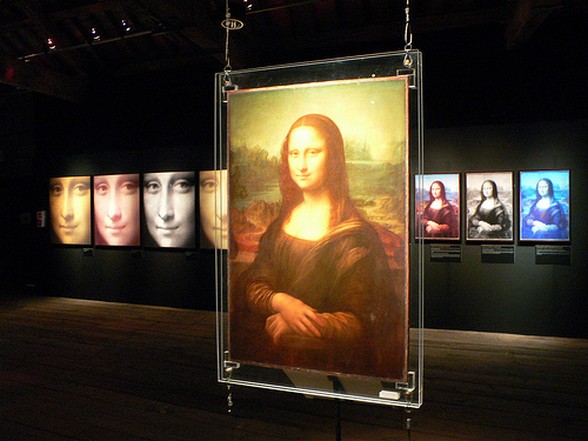
Up close with the Mona Lisa at MOSI in Manchester
www.flickr.com
|
Read more travel articles at Travel Blog Home
Don’t miss out – subscribe to Heather on her travels
Fancy a dip at the Roman Baths at Bath?
April 27, 2010 by HeatherCowper
Filed under Bristol and Bath, Leisure, Sightseeing, United Kingdom
Although I live in Bristol, a city that has plenty of interest for the visitor, the smaller city of Bath attracts many more visitors, with elegant Georgian architecture and the major attraction of the Roman baths. As a local you seldom visit the tourist attractions on your own doorstep and sometimes wonder what the fuss is all about or think you’ll get round to it eventually. I guess that’s why I had never visited the Roman Baths although my children had been on school trips, but as we had an French guest to show around, it was the obvious place for a day out.
The baths are built over a natural hot spring that existed well before Roman times, but was enclosed in the 2nd century AD to become the focal point for worship at the temple of the Goddess of healing Sulis Minerva. The Roman Baths that grew up were unusual for their size and for the amount of hot water that was freely available – most baths around the Roman Empire used smaller plunge pools and a limited amount of hot water, as heating water was expensive.
The baths were a cross between a public leisure centre and a site of devotion to the Goddess Sulis Minerva, with a temple courtyard and altar next to the spring. The Roman Baths in the centre of the city are now surrounded by the cathedral and shops but originally they stretched over a much larger area and some of the remains are under the level of the surrounding streets.
In the 18th century the Grand Pump room was built next to the main spring as a place where people could socialise and taste the health-giving spring water with these fashionable visits to Bath mentioned frequently in the novels of Jane Austin. In the 19th century the wider extent of the Roman Baths were uncovered, the columns and statues of the Great Bath reconstructed and the baths reopened to the public in 1897.
As you enter the bath complex you are given an audioguide that can play in several languages and can be stopped and started at each point on the tour which worked well and allowed everying to go at their own pace. At certain points there is commentary designed for children and also reflections by travel writer Bill Bryson on his experience of the baths.
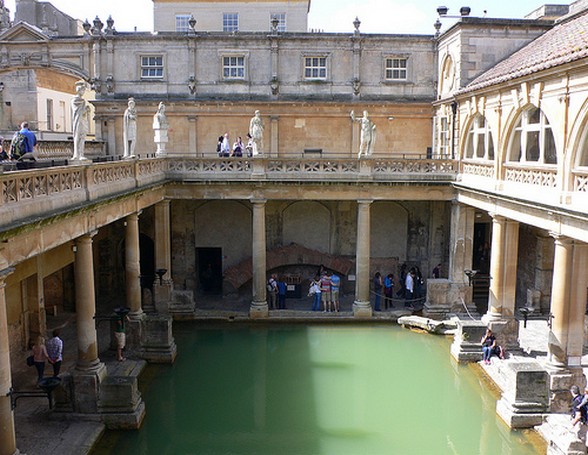
The starting point for the tour of the Baths is the terrace above the Great baths, which was created in 1897 when the baths were re-opened with imposing statues of Roman Emperorors who had connections with England. Moving around, you can get a view of the other different baths in the complex, including the smaller original King’s Bath which was a mysterious, sacred place containing the original spring water, steaming and gently bubblings like the whisper of the goddess. Into this pool, prayers or curses, written on small lead tablets were often thrown to ask for the goddess’s help. You can hear the voice of the angry plantiffs across the century requesting punishment for the person who had stolen their cloak or other possessions.
The remnants of the carved stone pediment of the temple have been consructed with a central Gorgon’s head looking more ancient Briton than Roman. Later in the tour you reach the Roman level of the baths, walk around the original temple courtyard and can see the original Roman brick overflow for the spring which channelled the water away to discharge in the nearby River Avon. The scene at the temple and baths in Roman times is brought to life by short film clips of people going about their business – the bored Roman matron and her young servant girl, the young family walking by, the temple priests, full of their own importance remind us of the real people who walked upon these stones.
The tour ends at the lower level of the great bath where vistors can sit by the water getting a sense of what it was like to come here to relax, bathe and socialise. It really feels like an open air swimming pool that you’d love to jump into and cool off. As a final part of your visit it’s worth walking through the pump rooms, where you can also have afternoon tea, and you can taste the mineral water from the spring served from an elegant Georgian urn. It doesn’t taste particularly pleasant, but then it it did it wouldn’t have such a reputation for health giving properties would it?
Do you have any major attractions like this near you that you never got around to visiting?
The Roman Baths
Pump Room
Abbey Churchyard, Bath BA1 1LZ
01225 477 785
Compare prices and book hotels in Bath through Hotels Combined
More things to enjoy in Bath
Dressing up in the Fashion Museum – in Bath
King Bladud’s pigs – in Bath
| www.flickr.com
|
Read more travel articles at Travel Blog Home
Don’t miss out – subscribe to Heather on her travels