Exploring the ‘Abode of snow’ in the Indian Himalayas
This guest post takes us to the mountain peaks, hill stations and Budhist monasteries of the Indian Himalayas with travel writer and blogger, Satu Susanna Rommi at Indian Travel Journey who has spent more than three years travelling in India.
It is hard to describe the Indian Himalayas without using clichés; snow-capped mountain tops, green valleys, clear mountain streams and blue skies. The Himalayas have all of that, and more. The name of the Himalayas means, literally, the “abode of snow”. I had never seen high mountains before visiting the Indian Himalayas, so even the first glimpse of snow-covered mountains in the distance was more than impressive.
As well as snow and mountains there are hill stations with comfy accommodation, activities from mountain biking to river rafting, treks to remote valleys, high mountain passes and some very scenic roads. And then there is Ladakh: India’s northernmost part, an old and remote Buddhist kingdom that was only opened to Western tourists in 1974.
Hill Stations in the Himalayas
When faced with the Indian summer heat, the colonial Brits used to escape to the mountains. Some of the hill stations in the Himalayas that were frequently visited by the Brits are still popular holiday destinations.
Shimla, in Himachal Pradesh at the foothills of the Himalayas, used to be the summer capital of the British colonial administration. Today it is popular with Indian visitors, especially couples on honeymoon. You can travel to Shimla by the “toy train”, a narrow gauge mountain railway that travels slowly through some very picturesque scenery.
Dharamsala and the nearby McLeod Ganj are home to India’s biggest Tibetan refugee community. McLeod Ganj is the headquarters of the Dalai Lama and the Tibetan Government in Exile. The area is filled with Tibetan Buddhist temples and monasteries, museums and cultural centres and Tibetan restaurants and shops. Dharamsala is very popular with foreigners and has opportunities for volunteer work, for Tibetan Buddhist studies, for trekking and for simply sitting back and admiring the mountain views.
Manali used to be a destination for backpackers and budget travellers, but today it is a busy hill town and popular with Indian and international holidaymakers. Located at the comfortable altitude of 2050 metres, Manali is a good base for exploring the nearby Kullu and Parvati Valleys. These are some of the most beautiful parts of India, with forest-covered hills, mountain streams running through picturesque valleys, and small villages surrounded by meadows and apple orchards.
You can visit holy places (there are several in the area), trek to the mountains, or try activities from river rafting and fishing to mountaineering. Manali is also the starting point for the journey further into the Himalayas and to Ladakh: the northernmost part of India.
Ladakh: Mountains and Monasteries
Ladakh is an old Buddhist kingdom in the middle of high mountains and high altitude desert. You can fly to Ladakh’s capital Leh, but if you do, you’ll miss one of the most scenic and most memorable road trips in the world. The journey from Manali to Leh takes around two to three days by bus, by jeep taxi or by motorbike. It is a scary trip with bad roads and several mountain passes, glacier streams running across the road and the risk of landslides or snowstorms blocking the way even in the summer.
I travelled to Ladakh on the back of my boyfriend’s Royal Enfield motorbike. He did the driving and I did the “being-scared-in the-back” part. We crossed ice-cold mountain streams, navigated potholes and rocks and dust and sand, and there were some seriously scary moments when the bike was stuck between an Indian army truck and a drop into emptiness, but I have never seen anything that can be compared to the barren, moon-like landscapes on the way to Ladakh.
Places to See in Ladakh
Ladakh’s capital Leh stands at the altitude 3505 metres. A stop on the old Silk Road trade route between India and Central Asia, Leh is also a centre for Tibetan Buddhist culture and is surrounded by some magnificent Buddhist monasteries. In the summer it gets busy with tourists from around the world, in the winter it is inaccessible by road because all the roads are covered in deep snow. Leh also has cosy guesthouses and modern hotels, Tibetan refugee markets and Kashmiri souvenir stores, Tibetan restaurants that serve momos (filled dumplings) and thukpa (soup), Western-style restaurants and coffee shops, and other places to sit back and enjoy the scenery.
Around Leh are several Tibetan Buddhist monasteries. Hemis is known as Ladakh’s wealthiest monastery and is especially famous for its colourful festivals. In the Thiksey monastery, prayer flags and giant prayer wheels decorate the steps that lead to a 15-metre high statue of Maitreya Buddha, the “future Buddha”. You can also visit the Leh Palace in the town itself or explore what is left of the old royal palace in Shey: Leh is full of ancient palaces, temples, monasteries and romantic ruins.
Leh is also good place to arrange trips to the surrounding areas: to the high altitude lake Pangong Tso in East Ladakh near the Chinese-controlled area; or to the highest motorable mountain pass in the world, Khardung La, at 5602 metres altitude. Beyond Khardung La, the Nubra Valley is a unique and beautiful Himalayan valley but you need a permit to visit. A short daytrip from Leh is the small and pretty village of Alchi, where you can see the rare Buddhist murals, the last few surviving pieces of 11th century Kashmiri Buddhist art.
Tips for Travel to the Indian Himalayas
The best time to visit the hill stations Manali, Shimla and Dharamsala is between March and June. Ladakh is only accessible by road between May and October (depending on when snow falls and melts). You can fly to Ladakh around the year but winters are very, very cold.
When travelling to Ladakh, be aware of the very real risk of acute mountain sickness (AMS). It is difficult to describe what AMS feels like, but trust me, you’ll know when you have it. Most people experience mild symptoms until they adjust to the altitude, and for the first few days in Leh, especially if you fly in from Delhi, you’ll probably feel tired and can barely walk a few hundred metres without feeling out of breath. Take some time to get used to the altitude before doing anything active.
My thanks to Satu Susanna Rommi of Indian Travel Journey for her travel inspiration and tips on visiting the Indian Himalayas. Satu is a freelance travel writer and has spent several years travelling around India where she also trained as an Ashtanga Yoga teacher.
Photos by Satu Susanna Rommi & Enzo Coribello
More tales from India for you to enjoy
Kolkata in India: City of Joy
Friday Photo – community celebrations in India
Friday photo – my Indian sponsor child
This article is originally published at Heatheronhertravels.com – Read more travel articles at Travel Blog Home
Don’t miss out – subscribe to Heather on her travels
What I packed for my mini Tour de Mont Blanc walk – video
September 26, 2010 by HeatherCowper
Filed under Accommodation, Europe, France, Hostels, Leisure, Nature, Tour de Mont Blanc, video, Walking
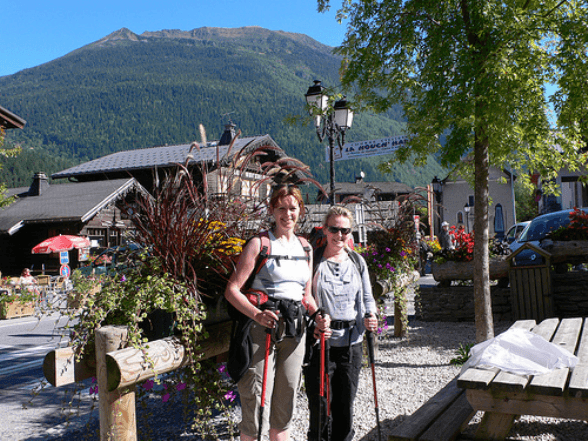
I’d like to share with you what I packed for my 3 days walking above Chamonix on the Tour de Mont Blanc Path, as you’ll want to pack light but take the right things, especially if you’re walking the full 11 day TMB circuit.
Although we were only walking for 3 days I don’t think I’d pack much more even if I was doing the full Tour de Mont Blanc, although there were one or two extra things that I’d pack if I went again. You need to take account of the fact that you could occasionally face snow on the high passes, even in the middle of summer, but you could also be lucky and have sunshine and blue skies, and there again, you’re unlikely to go for the full 11 days without some rain. Pack for every possibility seems to be the watchword.
At Refuge Bellachat I sat next to a French lady at dinner who told me about a previous Tour de Mont Blanc where she was camping in a snow storm in July. Bear in mind that we were walking on a stretch of the TMB that is popular and easily accessible through cable cars and chair lifts and that other stretches may be more remote. The things I’ve mentioned below are based on my experience over 3 days but I’d suggest that you consult guide books and other TMB resources to decide what you personally need to take – there’s an excellent packing checklist on the Walkingthetmb website.
If you cannot see the embedded video above, view it on my blog here
Download What to pack TMB Video [MP4]
Subscribe to all my videos in I-tunes
If you enjoyed this video, check out the others in my Video archive
Clothes
I took a set of clothes for walking each day and a set for the refuge, the idea being that you get hot and sweaty walking, then get to the refuge and shower and change into your clean set. Most people wear technical walking clothing, walking trousers with plenty of pockets and zip off legs and sports t-shirts that will dry quickly. I also had clean underwear and t-shirts for each day, but if you were being minimalist, you could cut down and try to wash clothes at the refuges each night. You’ll also need a good, light, waterproof jacket and waterproof leggings to keep you dry when it rains or possibly a poncho that has the advantage of covering your rucksack. Alternatively you might want to take a rucksack cover, but I just got by by packing everything within the rucksack in plastic bags. Make sure you have good hiking socks and comfortable boots – you need to take care of your feet on such a long walk. As we had excellent, sunny weather, I also wore my sunhat on the open stretches – you don’t want to get sunstroke. I also packed a swimsuit as you may pass various lakes, although I didn’t feel tempted to use it, prefering to bask in the sun than dip a toe in the ice cold water.
In the refuge
At most refuges you’ll be lent a pair of slippers to wear inside, as you’ll be requested to take off your walking boots at the door, so if you’re particular you may want to bring some light plastic flip flops of your own. I did bring pyjamas but I didn’t use them as the sleeping arrangements were communal and I also felt quite cold, so I just slept in my refuge clothes. You’ll want to make sure that any toiletries you bring are very small and light and you may want to consider multi-purpose items such as soap/shampoo or creams. I took a light technical towel that dried quickly and a sheet sleeping bag which you’ll need as you will just be provided with blankets and a pillow. If you’re really cutting down on clothes, you’ll want to wash out T-shirts and underwear when you arrive, so anything that will dry quickly is best.
Rucksack & Poles
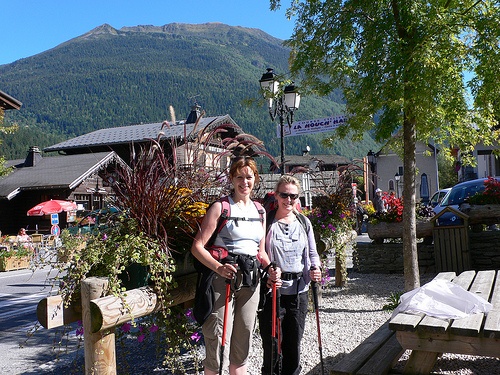
I used a 35 litre rucksack and found it was the ideal size and encouraged me to pack light. It was designed for walking of this kind and had plenty of zip compartments and outside pouches to keep water, map and snacks. Everything inside was packed into plastic bags to keep it dry in case of downpours and I also had a few spare plastic bags. I couldn’t have done without a pair of walking poles to help take the strain off knees and legs and rather than bring them from the UK, we hired them from the local sports shop for €5 per pair per day. This was economical for a short walk, but if we’d been going for longer, we could have bought a set starting at €35. I recommend that you book into the same hotel for the start and finish, so that you can leave any extra luggage there. I travelled with a carry-on case with the empty ruck-sack inside and then left the case in the luggage store at Hotel Slalom in Les Houches where we stayed.
Safety and Health
I did take a few items for safety, such as a compass, whistle and silver safety blanket that I never used, and a pocket map that I bought locally but only occasionally referred to as we mainly used the excellent Cicerone Tour of Mont Blanc Guide by Kev Reynolds. I packed a mini medical kit with pills for headaches & diarrhea, loads of plasters and few other things to ward of minor ailments. You’ll meet plenty of other walkers on the trail, so if you were taken ill on the trail I believe you’d find someone to help, but you need to be sure your travel insurance will cover you for mountin rescue in an emergency – helicopters don’t come cheap!
Eating on the trail
If you are staying in refuges on the trail, the price of €40-50 per night should include breakfast and evening meal, and this will typically be home style cooking, from ingredients that all have to be brought up from the valley. During the day, you will probably pass other cafes or refuges that are also open for ski-ers in winter and walkers in summer although on some stretches these may be few and far between, so you shouldn’t count on it. The cafes tend to be expensive – everything in the Chamonix valley is pretty expensive and also the costs of getting things up to high altitude bumps up the price. Typically a beer, soft drink or ice cream was €3-4 and a slice of tart €6 – we kept the cost down and didn’t really eat any full meals at lunch time, although we did stop for a drink and rest at every opportunity.
We carried enough snacks of cheese slices, dried fruit and nuts, rye bread and biscuits to keep us going for 3 days of picnic lunches and snacks, and it’s worth checking the route to see where there might be opportunities to pass through villages where you can stock up again. I also enjoyed having a few boiled sweets in my pocket for an energy boost on the tough uphill stretches. You will need lots of water – we each had 3 half-litre bottles and were on a popular stretch where we could easily top up if we needed to, but I spoke to one man who carried several litres of water with him, which adds to the weight of your pack.
Cameras and technical equipment
As a travel blogger I obviously travel with more gear than most and I took my laptop which I was able to use with the free wifi at Hotel Slalom, then left it in their office until our return. I walked with my audio recorder in my pack and my camera and video recorder close to hand when I was walking. With such amazing mountain views it would be a shame not to take at least a few photos of the trip and I think it creates great memories to take photos at different parts of the walk to make a photo-diary on your return and share your achievment. It is worth keeping cameras or video cameras in a case that you can put on your belt or sling around your body, as if you are walking with a friend or in a group you don’t always have time to stop for long to fish things out of your pack. We had good reception on our mobile phones and you may need to ring ahead to book the next refuge, which are often only contactable by phone.
Other things I wished I’d taken
I could have done with an extra fleece or long sleeved T-shirt for the evenings – even if you’ve had hot days, it can be very cold in the evenings at high altitude. As I’d seen that the forecast was good I didn’t worry too much about a warm hat or gloves, but after hearing the stories of walking through snow on the high passes, I could understand why you’d need them.
Resources for those walking the Tour de Mont Blanc
We used the Cicerone Tour of Mont Blanc guide by Kev Reynolds – we found it to be an excellent guide for both the clockwise and anti-clockwise route with detailed route guide, maps, accommodation information and points of interest along the route.
We stayed at Refuges de Bellachat and la Flegere above Chamonix. Bookings for Refuge de Bellachat can be made only by telephone (04 50 53 43 23) and cost €40 for dinner, bed & breakfast. The cost of staying at Refuge la Flégère was €47 per person for dinner, bed and breakfast and bookings can be made by e-mail bellay.catherine@wanadoo.fr or telephone (04 50 55 85 88 ). To avoid disppointment and a long walk, you should book your place in all refuges but can normally do so a day or two before, or from the previous refuge.
In the Chamonix valley we stayed at the modern, stylish, budget boutique Hotel Slalom that is perfectly placed in Les Houches for summer walking opposite the start of the anti-clockwise TMB route and close to the ski lifts for winter ski-ing. Double rooms in the summer season €86-99 plus €10 breakfast.
We booked our transfer from Geneva airport to Les Houches through Chamexpress and found them to run an extremely efficient airport to hotel service – cost was €25 + tax per person each way.
The walkingthetmb website has useful information to help you plan and prepare for your Tour de Mont Blanc walk, with a packing list and some links to other people’s photographs and on-line diaries to inspire you.
www.flickr.com
|
Other articles from our mini Tour de Mont Blanc
Day 1 on the Tour de Mont Blanc – Les Houches to Refuge de Bellachat
Day 2 on the Tour de Mont Blanc – Refuge de Bellachat to Flégère
Video diary – walking the Tour de Mont Blanc path above Chamonix
This article is originally published at Heatheronhertravels.com – Read more travel articles at Travel Blog Home
Don’t miss out – subscribe to Heather on her travels
Visiting St Denis Monastery on Zakynthos – in Greece
September 24, 2010 by HeatherCowper
Filed under Europe, Greece, Leisure, Sightseeing, Zakynthos
Although I’ve been coming to the Greek island of Zakynthos for years, I’d only once visited the monasteries at the rocky northern end of the island, near the village of Volimes, known for its lace making and honey. This year we decided to take a day trip in our hire car and headed up the spine of the island, with the salt flats of Alykes on our right, then turning into the rocky interior where the landscape becomes barren and covered with gorse and wild thyme.
We followed the signs to the well known St Denis monastery or Monastery of Theotokos Anafonitria that I had visited on a coach trip some years ago and knew we must have arrived when we found 2 coaches parked beside the snack bars and souvenir shops in the middle of nowhere. There was a heavy downpour as we arrived, so we sat in our hire car for a bit, then ventured inside when the rain had stopped. We managed to time our visit just right, in between a groups of Greek ladies all dressed in black, who were obviously making a devotional visit and a coach load of scantily dressed tourists, all short shorts and strappy tops. Just so you don’t make the same mistake it is considered extremely disrespectful to enter a church in Greece dressed as if for the beach – ladies, cover your shoulders and gentlemen, put on your long trousers!
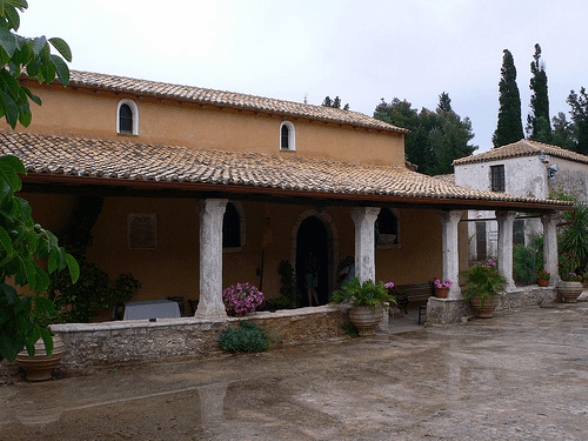
We entered the walled compound through a stone archway, into a pretty courtyard with a defensive bell tower and the small church opposite the arched entrance. The monastery was built in the 15th century and is quite sparse, inside apart from some lovely painted frescoes on the altar screen and a painting of St Denis. There is also an impressive icon of the Madonna and child, that apparently was brought here from Constantinople and after which the church is named. The front of the icon is decked with row upon row of gold rings and earings that must have been donated by faithful pilgrims. St Denis or Aghios Dionysios, was born on the island in 1546 to a wealthy family on the island with connections to the Venetian government of the time, becoming Archbishop of Zakynthos and after his death, was made the patron saint of the island. It’s typical for the Greeks to name their children with saints names, and half the boys on the island must be named Denis, including my Greek brother-in-law.
After our wander around, we drove a little further along the road to stop at a second monastery of St Georgios Krimnon, built in a similar style with a courtyard, defensive tower and church inside the enclosure, although this time there were cloisters along one side of the courtyard. The church was closed at the time, so we couldn’t look inside but we were intrigued by the large bells hanging from the olive trees outside. We couldn’t get away without buying some nougat from the old man and his wife manning the roadside stall who was calling everyone to come and buy his fruit, honey and oil with all the persistance and patter of a trader in the bazaar.
Our monastery visits made an interesting stop on a tour of the north of the island, taking in the small town of Volimes that’s famous for it’s lace making, rugs and honey and a photo stop on the cliffs overlooking the picturesque bay of Navagio or Smuggler’s Bay that features on all the guidebooks and postcards.
This article is posted as part of Photo Friday over at Delicious Baby – head over to see all the other Friday Photos here.
More things to see on Zakynthos
The Venetian Fort at Bohali on Zakynthos – Greece
A tour of Romas Mansion – on Zakynthos
Is this the best beach in the world? – Navagio on Zakynthos
www.flickr.com
|
This article is originally published at Heatheronhertravels.com – Read more travel articles at Travel Blog Home
Don’t miss out – subscribe to Heather on her travels